

From research to practice: Bringing building renovation passports into the public sector
When we think about climate change, buildings might not be the first thing that comes to mind. Yet in the European Union, they account for around 40% of energy use and more than a third of greenhouse gas emissions. This means that the way we design, manage, and renovate our buildings is not just a technical matter, it is central to achieving Europe’s climate goals.
In response, the revised Energy Performance of Buildings Directive (EPBD) is pushing for a profound transformation of the building sector. Among its key measures is the introduction of Building Renovation Passports, tools designed to guide building owners through a step-by-step journey towards energy efficiency and decarbonisation. At OneClickRENO (OCR), this is precisely where our work comes in: developing practical, user-oriented solutions that make this transition not only possible, but actionable.
Note: This is a mock up of what the Building Renovation Passport could look like, but it is not the final result. Source: IVE - OCR.
This ambition was recently brought into a real-world context during the latest FACILITA Community of Practice session, organised by FEDARENE. The session, focused on building registries and data collection, brought together perspectives from across Europe to explore how data is shaping the future of renovation.
Throughout the discussion, a shared understanding emerged: data is not just a technical layer in the renovation process, it is a strategic asset. From enabling better planning and prioritisation to supporting investment decisions, the quality and structure of building data directly influence the effectiveness of renovation strategies.
This was reflected in the different contributions shared during the session. Lucía Pareja, from Instituto Valenciano de la Edificación (IVE), presented the current status of the FACILITA project, highlighting how structured building data can support more effective renovation pathways for both public and private buildings. Building on this, Marko Zlonoga offered insights from the Croatian context, illustrating how data management practices are already shaping more informed decision-making in public building renovation.
Within this broader conversation, our expert Ana Sanchis Huertas, researcher at IVE, presented the latest developments of the OneClickRENO Building Renovation Passport. Her intervention offered a glimpse into how research and innovation are beginning to translate into practical tools for implementation. In particular, she introduced how the RenuEva tool, developed within OneClickRENO, is being adapted to support the renovation of public building stock. While much of the conversation around renovation focuses on private housing, public buildings represent a critical opportunity to lead by example, reduce energy consumption at scale, and improve the quality of spaces used daily by citizens.
The session also shed light on how the Building Renovation Passport will function in practice. Rather than offering a static diagnosis, the passport is conceived as a dynamic roadmap, guiding building owners through a phased renovation journey. It structures decision-making over time, presenting clear pathways, priorities, and options, while allowing flexibility to adapt to specific needs, budgets, and constraints. In this sense, it moves beyond being just a technical report, becoming a decision-support tool that empowers users.
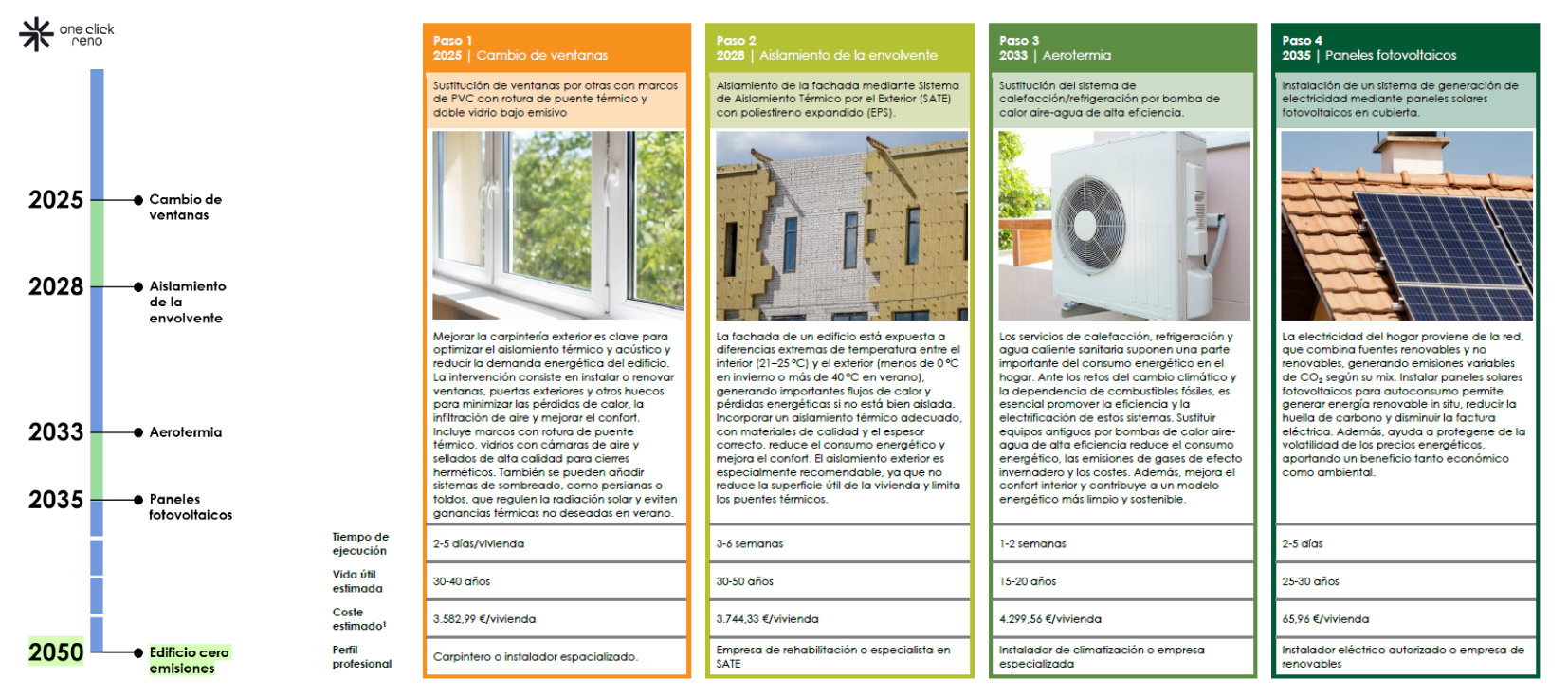
Note: This is a mock up of what the Building Renovation Passport could look like, but it is not the final result. Source: IVE - OCR.
What made this exchange especially valuable was not only the presentation itself, but the context in which it took place. FACILITA, through its One-Stop-Shop model, is working directly with public authorities to enable and accelerate renovation processes. By integrating tools like RenuEva into this ecosystem, the gap between technical development and on-the-ground application begins to close.
This connection between projects is not coincidental, it reflects a broader shift in how innovation is being developed and deployed across Europe. Research projects like OneClickRENO are no longer operating in isolation; their results are increasingly being taken up, tested, and scaled through complementary initiatives like FACILITA. This creates a continuum from knowledge generation to real-world impact, ensuring that solutions do not remain theoretical but are actively used where they are needed most.
Ultimately, what this collaboration demonstrates is that achieving energy-efficient buildings is not only about having the right technologies or policies in place. It is about ensuring that tools are usable, adaptable, and embedded within systems that support their adoption. It is about bridging the gap between ambition and implementation. And perhaps most importantly, it is about recognising that the transition to a more sustainable building stock will not happen through isolated efforts, but through connected ecosystems of projects, practitioners, and institutions working together towards a common goal.
